Why implant suitability cannot be guessed
Dental implant suitability depends on bone volume, gum health, infection, bite forces, medical history, medication, smoking status and the position of nerves or sinuses. Photos can show the visible problem, but they cannot confirm whether an implant can be placed safely. This is why a Budapest implant plan should begin with evidence and remain conditional until the correct diagnostic imaging has been reviewed.
What records help the first assessment
The most useful first records are a recent panoramic X-ray or CBCT scan, clear smile photos, bite photos, a short medical history and any existing treatment plan. If you have been told that you need bone grafting, sinus lift, All-on-4 or extractions, include that information. The more complete the first enquiry is, the more useful the first treatment estimate can be.
When CBCT imaging is important
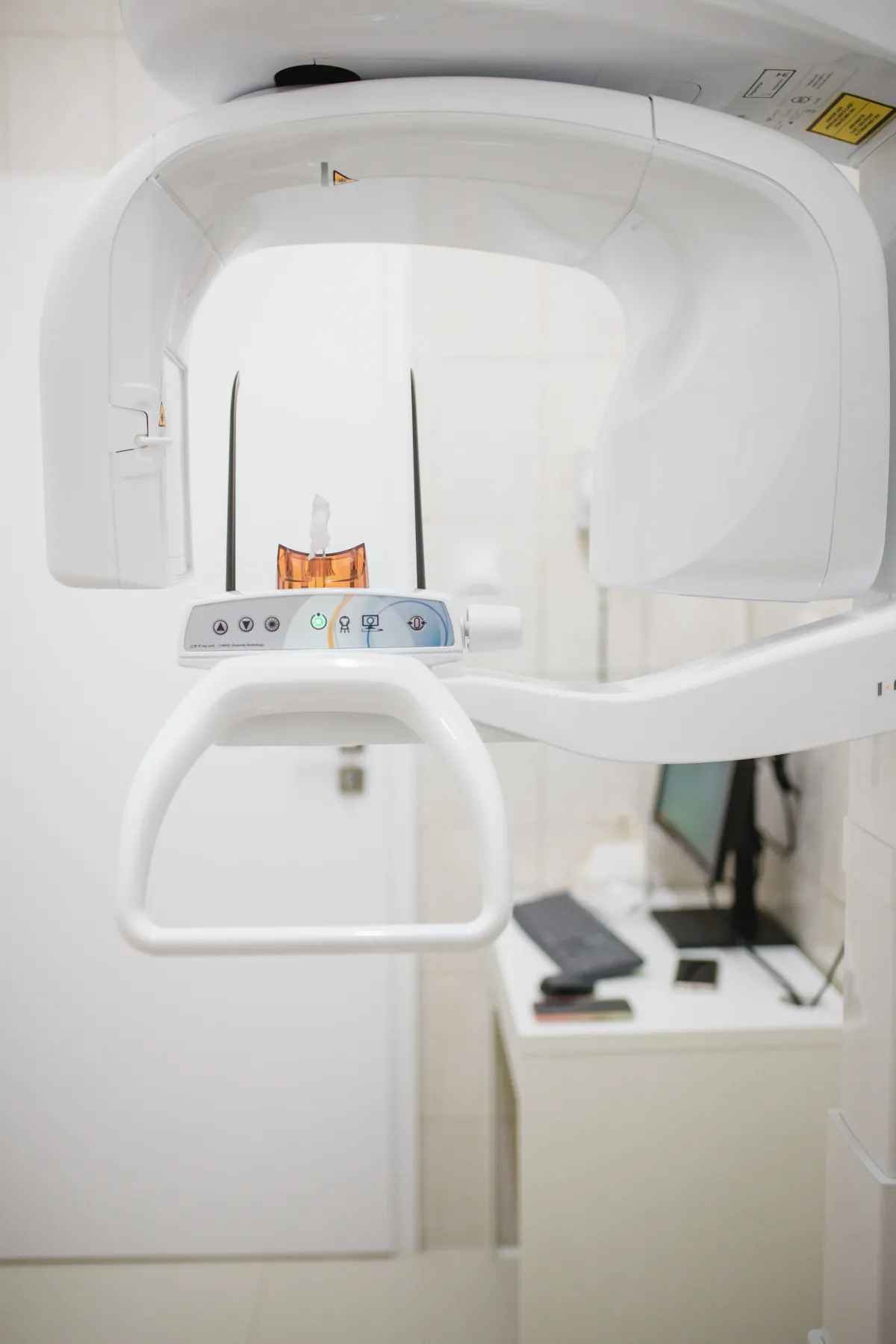
A CBCT scan shows three-dimensional bone anatomy, which is especially important around the upper sinus, lower jaw nerve and areas where teeth have been missing for a long time. A panoramic X-ray can start the conversation, but CBCT imaging is often needed before confirming implant position, bone grafting, sinus lift or full-arch treatment.
Medical history matters
Patients should mention diabetes, blood thinners, osteoporosis medication, immune conditions, radiotherapy history, smoking or vaping, allergies and dental anxiety. These details do not automatically prevent treatment, but they can change timing, medication, surgical approach or the need for medical clearance.
Suitability for All-on-4 and All-on-6
Full-arch implant treatment needs a wider assessment than a single missing tooth. The dentist must consider remaining teeth, bone distribution, smile line, speech, bite forces, temporary teeth and the final bridge design. Some patients may be suitable for fixed temporary teeth within a short Budapest visit, while others need staged healing or a different restoration.
What happens after the check
The check is not a diagnosis. It helps you understand whether you have enough information to request a meaningful treatment plan. After you send records, the next step is a written estimate, practical travel guidance and a clear explanation of what still needs confirmation during examination and imaging in Budapest.