Planning
How to Request a Budapest Dental Quote Online
Learn how to request a Budapest dental quote online, including which photographs, X-rays, medical details and treatment questions to send.
Key takeaways
A useful preliminary quote needs a clear goal, relevant photographs and honest medical context.
Ask the estimate to separate included treatment, assumptions and items that still need confirmation.
Remote information can guide the next step, but it cannot replace diagnosis by the treating dentist.
A useful dental quote abroad is not just a fast price. It should explain what appears likely, what is included, what remains uncertain and which diagnostics are still needed before the treating dentist can confirm a plan.
Dental Treatment helps international patients prepare a useful Budapest dental treatment enquiry. We organise the records, identify missing information and explain the next practical step. Diagnosis, suitability and the final plan are confirmed by licensed dentists.
Start with one clear message
Write where you are based, what bothers you most and which treatment you are considering, if known. You do not need the correct dental terminology. A description such as "I have three missing back teeth" or "my upper crowns are failing" is more useful than guessing a diagnosis.
Include:
- country and city;
- the main problem you want to solve;
- any pain, swelling, loose teeth or urgent concern;
- the treatment you are considering, if known;
- preferred travel period; and
- whether you already have a local plan or quotation.
The secure online quote form collects these essentials without requiring WhatsApp.
Take useful dental photographs
Phone photographs can help identify which records the clinical team is likely to need next. Use natural light, avoid filters and keep the camera steady.
For a general first review, try to send:
- a full smile photograph;
- upper teeth from the front;
- lower teeth from the front;
- right and left bite photographs;
- the biting surfaces where possible; and
- a close-up of the main problem area.
Move the lips and cheeks gently out of the way without causing discomfort. Do not place objects in the mouth that could cause injury.
Photos cannot show bone volume, nerve position, disease below the gum or the condition of roots. They support the first conversation; they do not replace diagnostics.
Add X-rays and scans when available
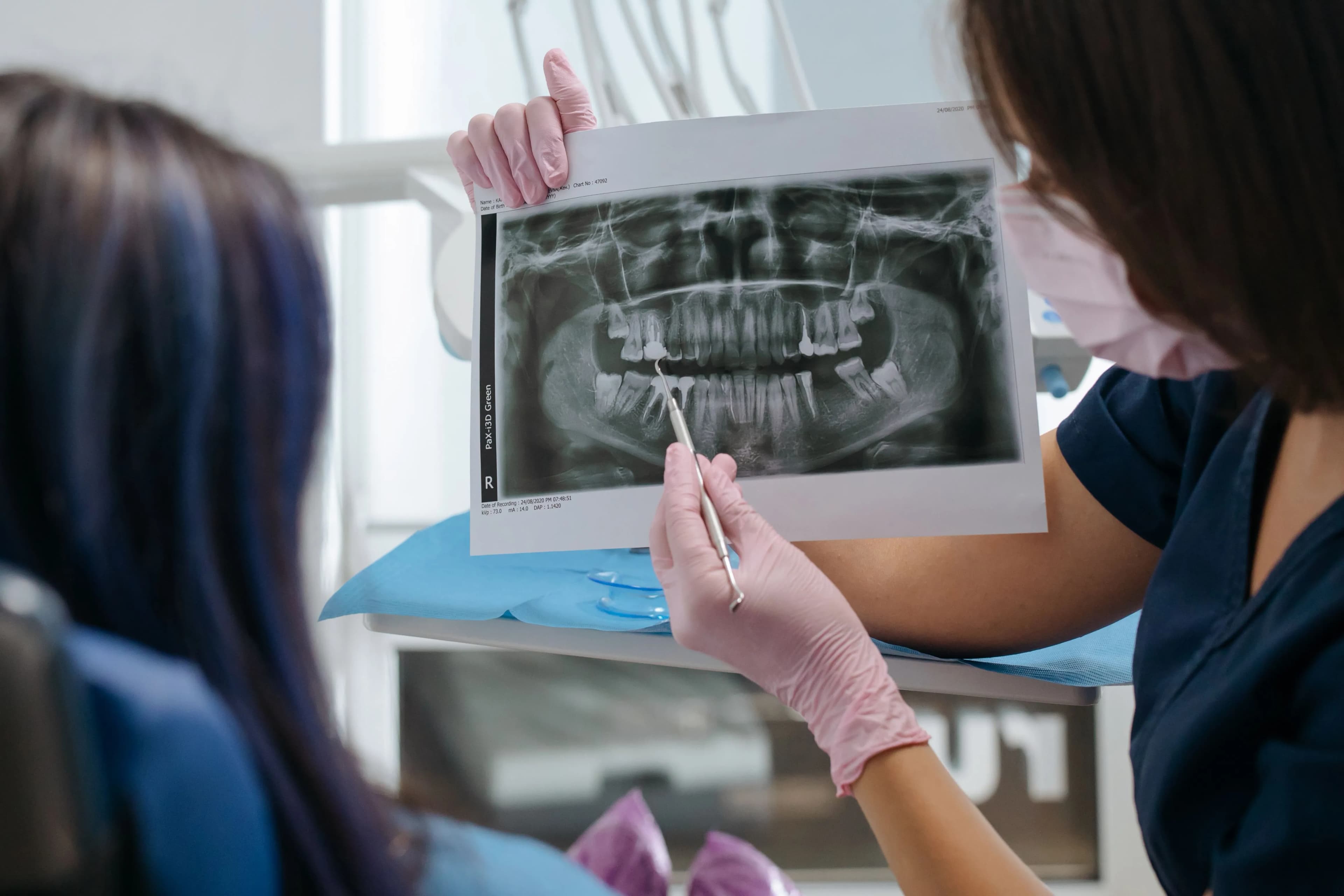
A panoramic X-ray can provide a preliminary overview of missing teeth, existing implants, crowns and areas that may require further investigation.
For implants, grafting, sinus treatment or full-arch planning, CBCT or other appropriate three-dimensional imaging may be needed before a surgical plan is finalised. The treating clinician decides which imaging is suitable and whether an existing scan is current enough.
Do not delay an enquiry simply because you have no scan. Send what you have and ask what the next stage requires. Read the dental implant planning guide for more detail.
Include relevant medical context
Mention current medication, allergies, smoking or vaping, diabetes, blood-thinning medication, previous implant problems and any condition that may affect treatment or healing.
Include relevant dental history such as gum disease, grinding, previous root canal treatment or difficulty with anaesthesia. If you are unsure whether something matters, include it and allow the clinical team to decide.
Share sensitive information only through the agreed communication channel. Do not stop or change prescribed medication unless the appropriate prescribing or treating professional has advised you to do so.
Explain the result you want
Clinical information is essential, but the intended outcome matters too. Say whether the priority is replacing missing teeth, improving chewing, reducing the visibility of old dental work or changing the appearance of the smile.
For cosmetic treatment, describe what you consider natural. If you have reference images, explain what you like about them rather than expecting an identical result on a different face and bite.
Clear goals help the dentist discuss realistic options and alternatives.
Ask for an itemised estimate
For implant treatment, ask whether the preliminary estimate includes:
- implant fixture;
- abutment;
- final crown or bridge;
- diagnostic imaging;
- extractions;
- temporary teeth;
- grafting or sinus treatment if required;
- medication; and
- planned review appointments.
For crowns and veneers, ask about the number of units, material, temporary restorations, laboratory work and any supporting gum or root canal treatment.
Published starting prices are reference points only. Licensed dentists confirm the complete quotation after reviewing the available evidence and completing the required assessment.
Ask about timing as well as price
Tell us when you could travel, but avoid presenting a fixed flight as a deadline the treatment must fit. The itinerary should follow the clinical sequence.
Ask:
- how many visits may be required;
- the purpose of each visit;
- whether a healing stage is expected;
- what temporary restoration is planned; and
- how long to remain in Budapest after the final procedure.
The international dental travel guide explains how appointment timing, accommodation and recovery fit together.
Understand why an estimate may change
Remote planning has limits. Bone volume, infection, gum condition, bite forces, old dental work and whether individual teeth can be restored may change what is clinically sensible.
A responsible preliminary estimate should separate:
- what appears likely from the records supplied;
- what still needs confirmation; and
- what could change the scope, timing or price.
Pressure to book flights before these assumptions are clear is a reason to slow down. Use the dental treatment abroad safety guide before committing.
What happens after you send the request
Dental Treatment checks whether the enquiry contains enough information for a useful clinical review. We may ask for clearer photographs, an X-ray, a scan or additional medical context.
The clinical team then reviews the available records and provides a treatment direction and preliminary quotation where possible. You receive the information, appointment options and travel timing in clear English.
The final treatment decision follows the diagnostics the treating dentist considers necessary.
What a useful reply should contain
A helpful first reply does not need to pretend every detail is known. It should make the next decision easier.
Look for:
- a summary of the likely treatment direction;
- records or diagnostics still needed;
- a preliminary itemised estimate where possible;
- assumptions and possible additional treatment;
- likely appointment stages; and
- a practical route for further questions.
If the answer is only a total price and a request for a deposit, ask for the missing detail before progressing.
A message template you can use
Hi Dental Treatment, I am based in [country and city]. I would like a preliminary treatment estimate for [main concern]. I am considering [treatment if known] and hope to travel around [month or timeframe]. I can provide [photos, panoramic X-ray, CBCT scan or local treatment plan]. My relevant medication or medical information is [details]. Please let me know what additional information is needed.
This is enough to begin without pretending that a remote message is already a diagnosis.
Final check before sending
Make sure the message includes your location, main concern, available records, medical context and realistic travel period. Check that photographs are in focus and attached documents show the date where appropriate.
Do not send passwords, payment-card details or unrelated identity documents through the form. Larger clinical files can be shared through the agreed channel after the first reply.
For broader preparation, continue with the international dental tourism checklist and the guide to records after implant treatment abroad.
Practical answers
Frequently asked questions.
Can I get a dental quote from photographs alone?
Photographs may support an initial conversation, but they cannot show bone anatomy, tooth roots or all disease. Imaging and an in-person examination may be needed before the plan is confirmed.
Do I need a CBCT scan before contacting Dental Treatment?
No. Send what you already have. The clinical team can explain which additional imaging is likely to be useful for the treatment being considered.
Why can an online dental estimate change?
The condition of teeth, gums, bone and bite may differ from what remote records suggest. A responsible estimate explains these limits before travel.
Can I upload large scan files through the form?
Use the form for the first message. Larger X-rays or scan files can be sent through the agreed secure channel after a reply.
Sources and further reading
Ready to compare your options?
Send your details for a clearer plan.
Share what you want to fix, where you are based and any X-ray or scan you already have.